FindFest : oTP team 1
Seoul Festival Explorer: RAG(Retrieval-Augmented Generation) based Personalized City Guide & Smart Festival Recommender
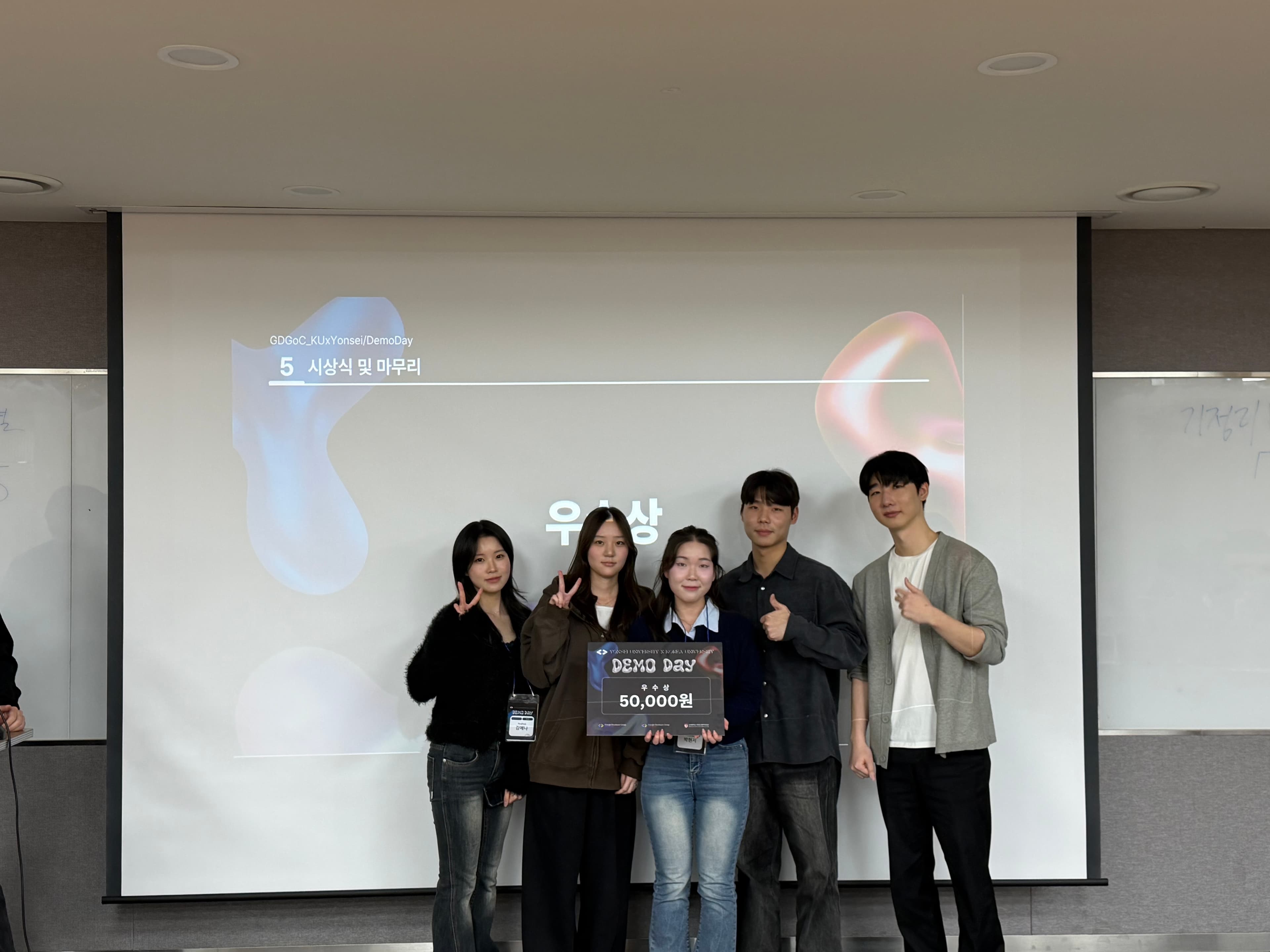
FindFest: Integrated Cultural Event Exploration Platform for Seoul
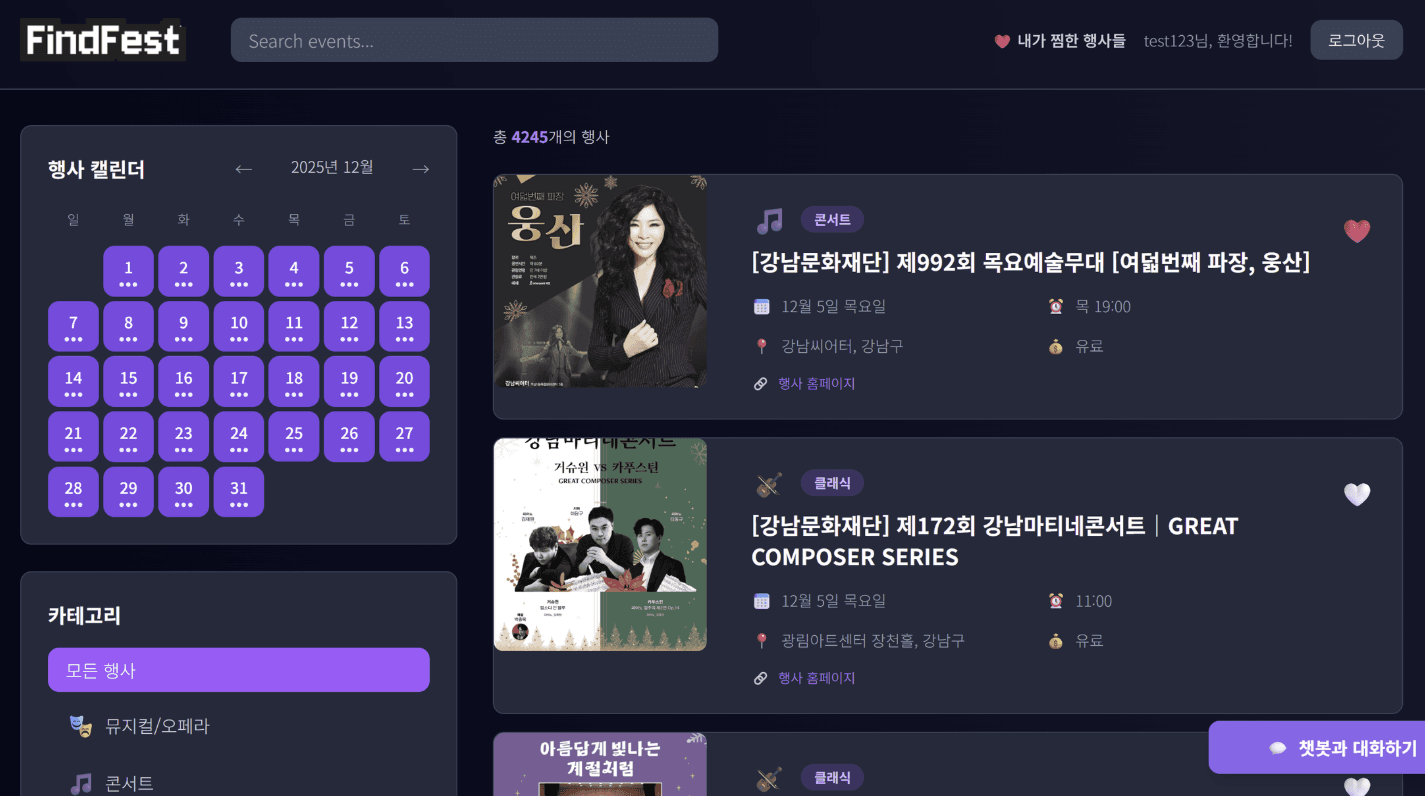
FindFest is a web service that consolidates scattered festival and event information from across Seoul into a single platform, allowing users to explore the city as if they were on a guided journey.
- Project Background & Objectives
-
Problem Definition: Addressed the difficulty of searching for events due to fragmented information across various channels (district offices, SNS, etc.), the lack of personalized management systems, and poor user experiences.
-
Solution: Built an integrated platform providing city-wide data by incorporating an AI chatbot, user authentication, and a "Save/Favorite" feature.
-
Target Audience: Primarily targeting young adults in their 20s and 30s with high demand for cultural activities, social gatherings, and extracurricular experiences.
- Core Technologies & Implementation
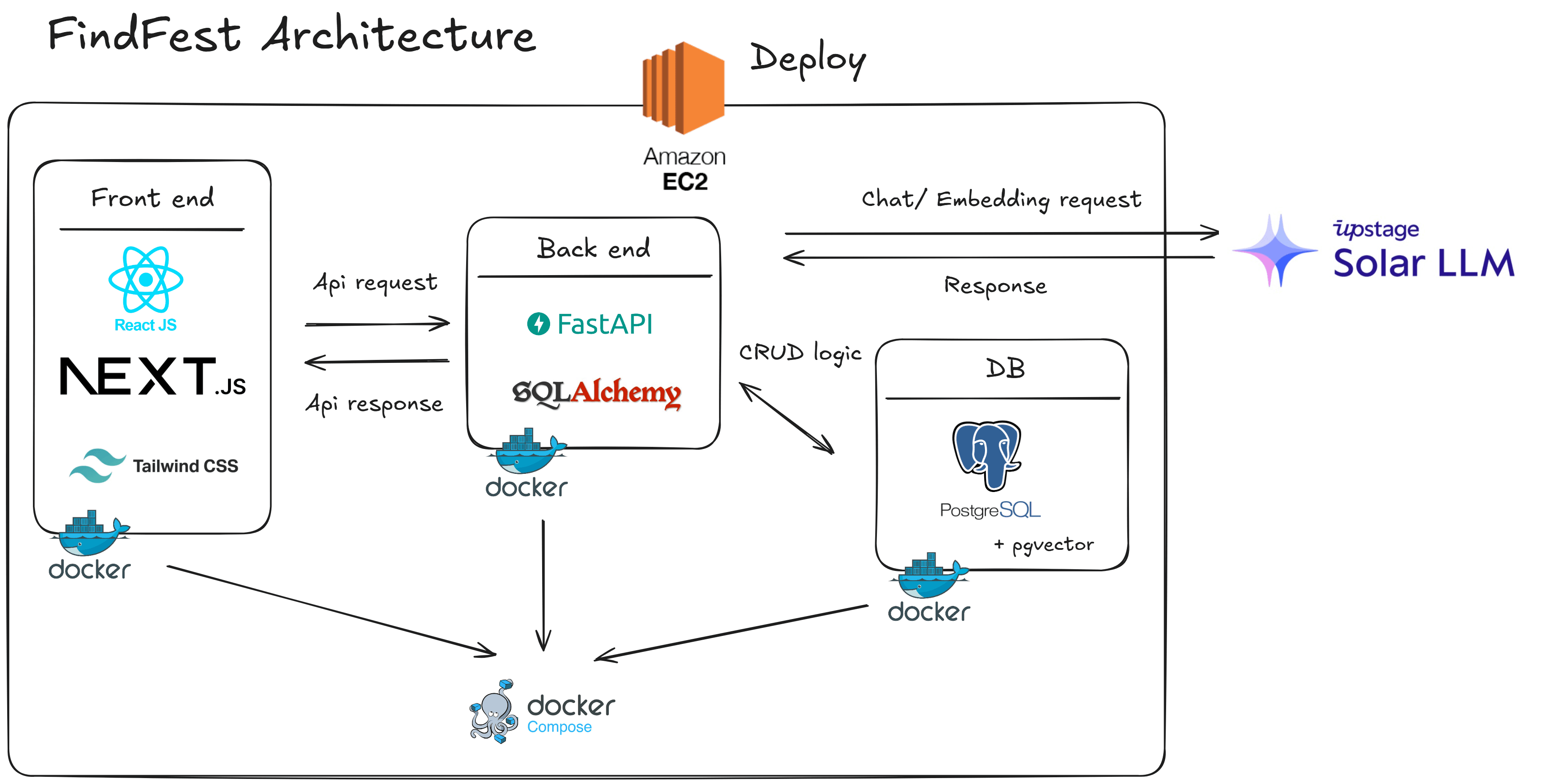
Service Architecture
-
Frontend: Utilized Next.js (App Router) and TypeScript to ensure fast loading speeds and data type stability.
-
Backend: Developed with FastAPI and SQLAlchemy; managed relational data and vector embeddings using PostgreSQL and pgvector.
-
AI: Implemented advanced search and chatbot functionalities using Upstage’s Solar LLM and embedding models.
-
Deployment: Deployed on Amazon EC2 using Docker Compose for container orchestration.
Key Features
-
Data Pipeline: Periodically collects the latest information via the Seoul Open Data Plaza API, performing de-duplication and vector embedding before storing it in the database.
-
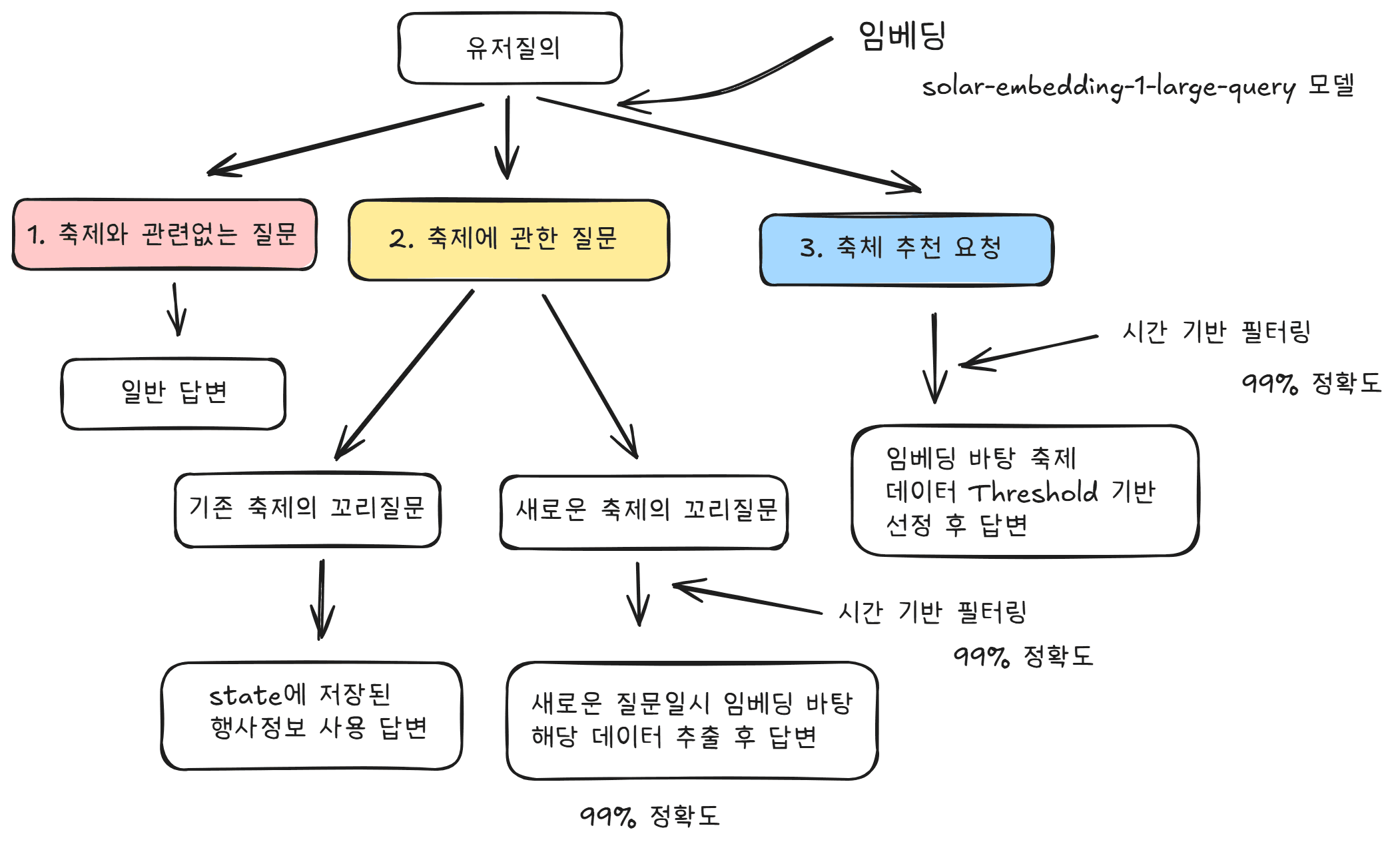
AI Chatbot: Utilizes a LangGraph-based workflow to analyze user intent (general conversation, recommendations, date-based searches, etc.) to provide intelligent responses.
-
Personalization System: Implemented JWT-based authentication for secure login, allowing users to "save" events and manage them on a dedicated profile page.
-
Dynamic Filtering: Provides a UI that allows users to instantly explore events through categories, date pickers (calendar), and keyword searches.
- Collaboration & Achievements
-
Collaboration Tools: Followed a GitHub branch strategy with PR-based (Pull Request) code reviews; managed schedules and meeting minutes via Notion.
-
Key Results: Successfully integrated over 4,200 event data points and built a high-fidelity MVP (Minimum Viable Product) featuring both AI-driven interaction and personalized user management.
Gallery
FindFest : oTP team 1 image 1 of 3
More from 25-26
25-26
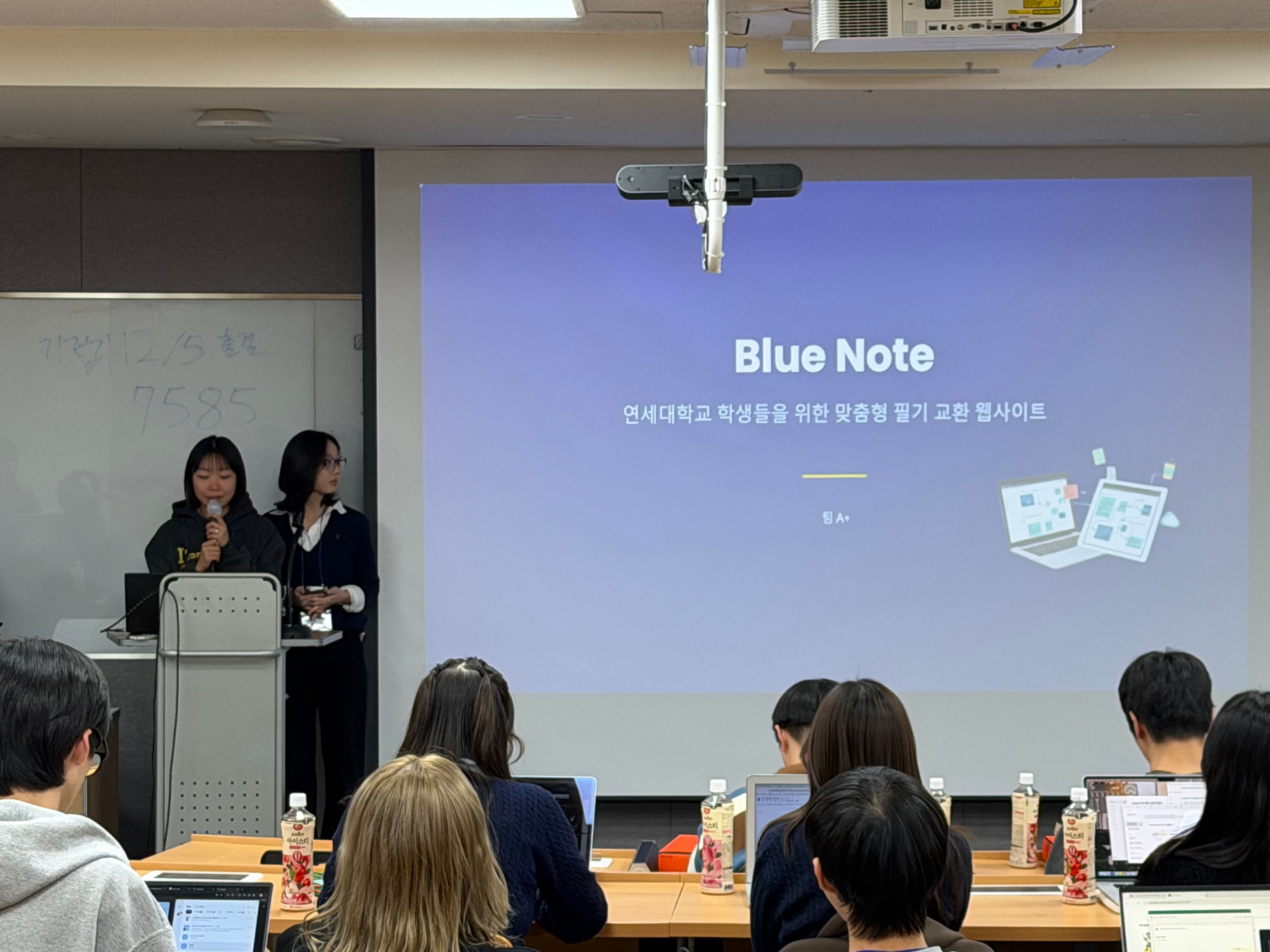
BlueNote: oTP team 3
A customised note-sharing (note-exchange) website for Yonsei University students.
- YEON EUNSEO
- Yun Minkyun
- Kang Hyunbi
- Cho Yerin
- +1
25-26
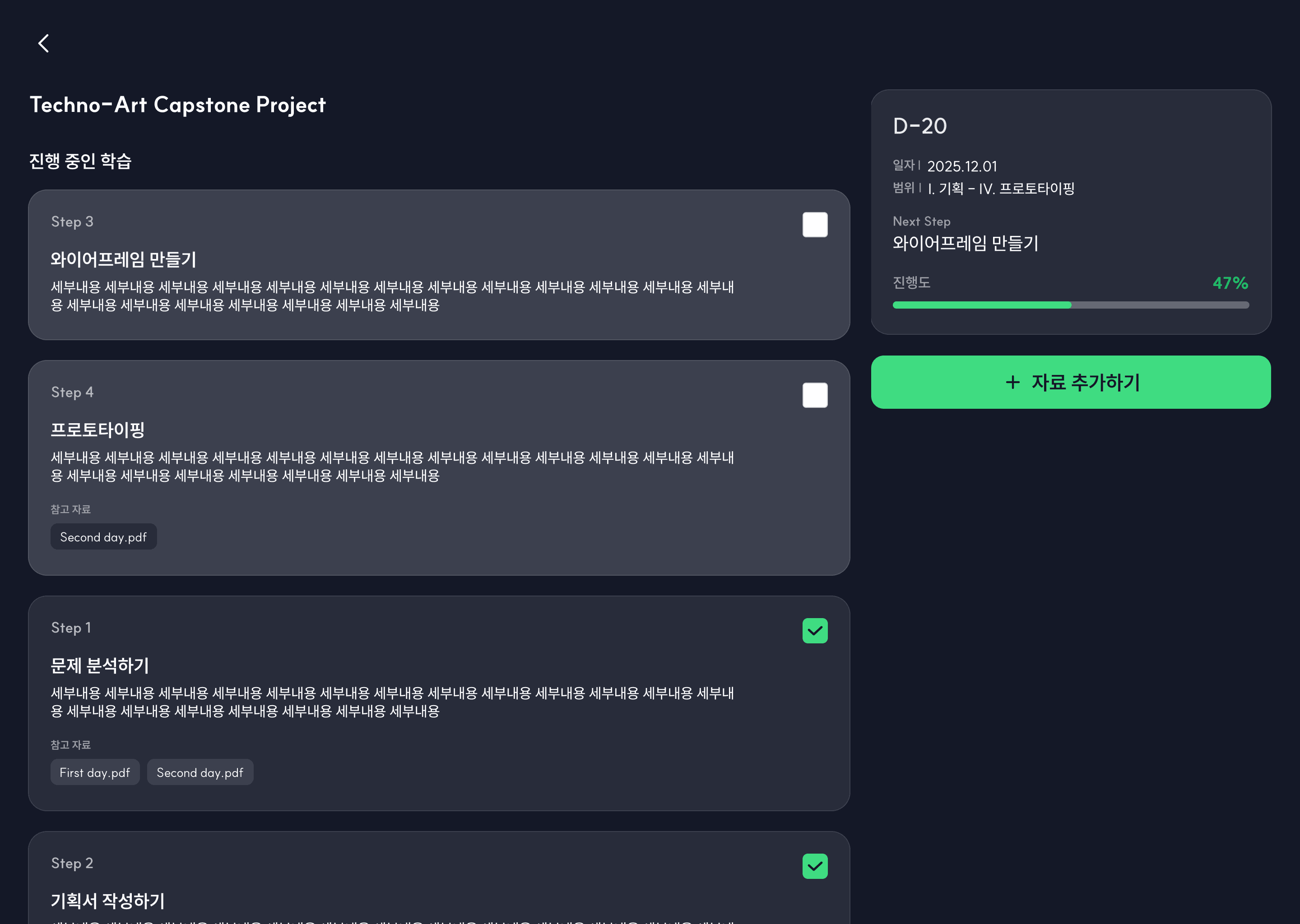
P-scheduler : oTP team 4
AI scheduler program based on lecture material input
- LEE SeokWon
- Chae Jaeho
- Baek Jeongyun
- Lee Chanhee
- +2